
My profession currently is in an existential crisis.
No really.
For people who don’t quite understand why, I have a good analogy: suppose you are a woodworker and take pride in the furniture you are creating. You are skilled with the saw and chisel, and can create beautiful chairs and cupboards.

And then all of a sudden someone comes by and tells you to put aside all the tools you’ve mastered, and you are to start programming CNC milling machines. Not one, but a whole factory of them.
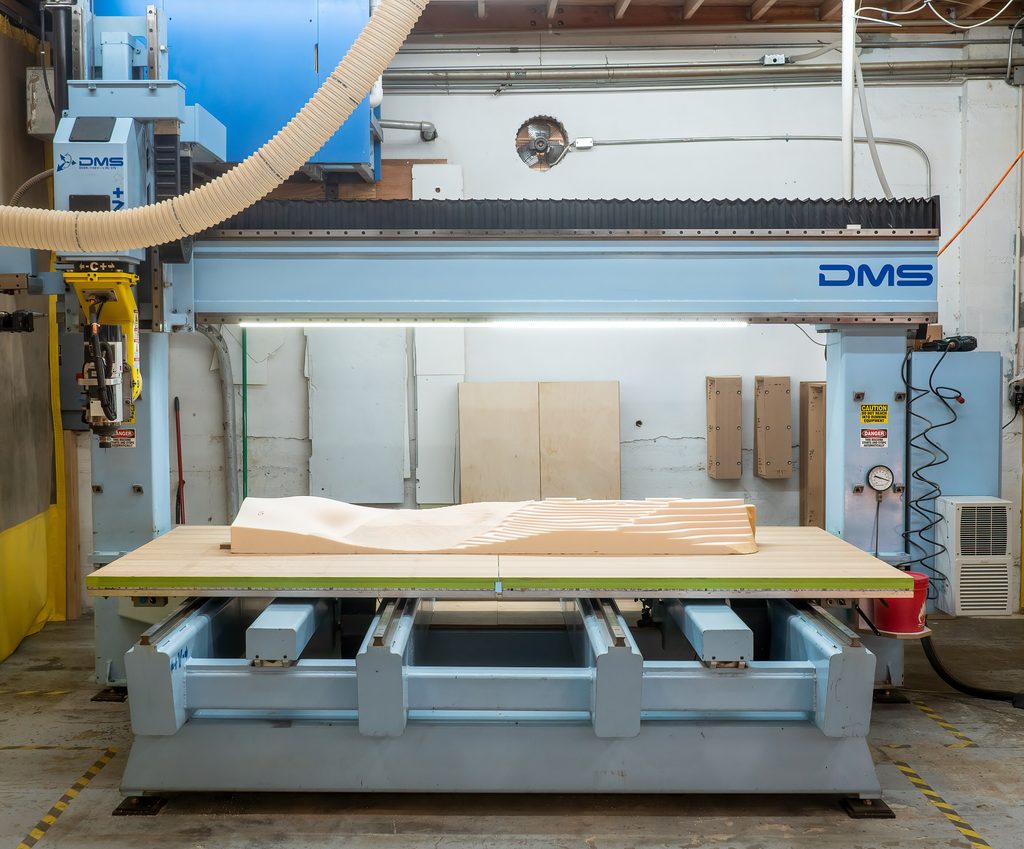
Basically that is what’s happening to the software development profession. Putting myself in the shoes of the imaginary woodworker, I would be lost. That CNC stuff is not what I signed up for. As a software developer I’m also a bit lost, trying to find my bearings in a world that suddenly has AI writing code.
I remember my first programming experience well: it was 1983, in a small room somewhere in de attic of my highschool, where three Newbrain computers we placed on a table.Vague cream-brown boxes, key’s on top, connected to a monitor with a green blinking block.
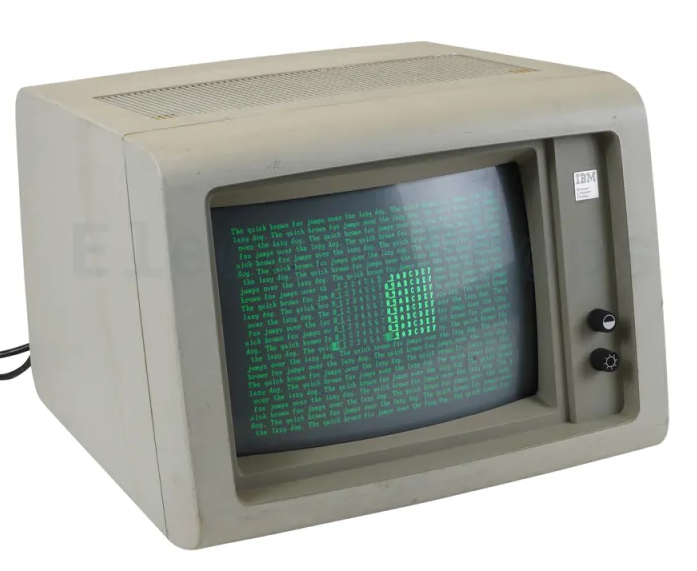
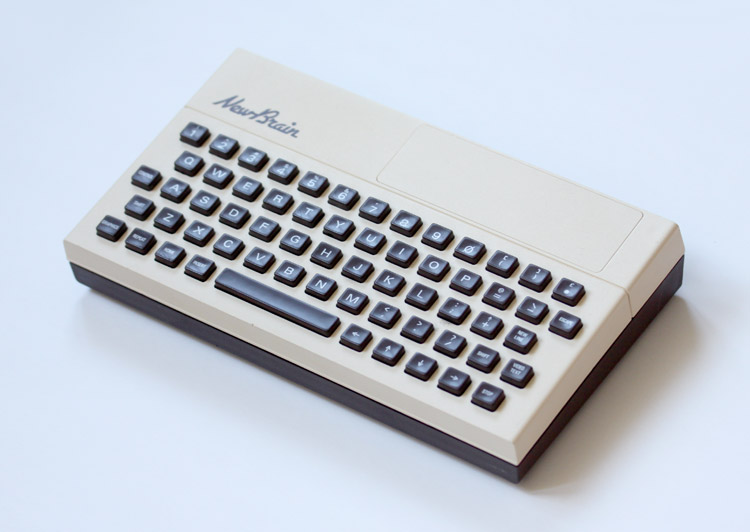
Computers back then booted into BASIC, so the first ever instruction I typed on a computer was “print”. It didn’t write “hello world” on the screen, that wasn’t a thing back then, but it printed something, I don’t remember. The next command was a for: something like “for i = 1 to 10, print, next”. It was an amazing experience in a world where only hardwired buttons existed, and it defined my future.
What I always tell people, 40+ years down the road, is that my profession is amazing. I learned certain skills in 1983 and even though the world of computers has changed drastically since then (for one we now do not have green long glowing screens anymore), I still type “for” almost daily. The world of computers has become complex compared to the good old 24×80 text screens, with mobile & web, internet and cloud computing, the tools have not. I still rely on the same skills to make things works. I enjoy sitting behind my computer, with something to eat, something to drink, sculpting away at my code; improving readability, introducing reusable components, in short: making the code beautiful. Not unlike a woodworker.

But the sudden advent of AI, and the skill it has in writing code, has turned this upside down. My profession is now asked to send prompts to AI agents to write code. Preferable multiple agents at the same time, running in different roles. A full fledged factory filled with CNC milling machines.
Okay then. It’s not like my profession has not had to deal with some drastic changes before. Let’s adapt.
On the one hand I’m amazed at how easily I accept this new world order, find sculpting away at code suddenly tedious, and quite enjoy that some AI is doing it for me. Humans are intrinsicly lazy, it seems. On the other hand sculpting gave me insights, it made me reconsider structures, and I could correct many mistakes well before they caused any problems. That part is gone, and with that a sense of being in control.
But I’ve also learned that AI coding agents easily make a mess out of things. They just as easily make mistakes as humans do, only a different kind. So writing code may not be a skill that is needed much at the moment, trying to prevent the AI from making a mess is. And for that my other skills are still needed, those that I used to determine what code to write. Just like that woodworker: not every piece of wood is the same. You cannot just slap a chunk of a tree in a milling machine and assume something beautiful will come out. Sure, if you take sawdust, mix it with some resin, you get a nice uniform… something. That is easily processed, but it’s not wood.
So if your software is 1 in a 1000, a website with some standard functionality, yet-another-platform-game, then AI can do a great job. But if your software is specific, you don’t mind the details of the code but do mind if software is structurally sound, and if it can adapt to future requirements, then the 40+ years of experience still matters. Because the one thing I’ve learn in the last year is that AI requires coaching. A harness to steer its movement, and a human evaluating what it has cooked up this time.

Maybe someday AI will completely replace software engineers, but that time is not now.